


By interlink | 03/04/2026
.png)

.png)
.png)
.png)
Ripple Effect: Middle East Crisis Reshapes Global Aviation Logistics and Supply Networks
Geopolitical tensions in the Middle East are fundamentally reshaping the global aviation logistics landscape. From blockaded flight corridors and soaring fuel prices to the fracturing of MRO hubs, the supply of aircraft parts is facing an unprecedented stress test.

The cascading effects of the Middle East conflict have transformed routine aviation procurement and logistics into highly dynamic, risk-sensitive operations, demanding continuous coordination among suppliers, operators, and MRO service providers.
The Macro Picture of Operational Airspace
As of late March 2026, the central Middle East flight corridor has essentially ceased operations for regular commercial flights.
Following drone and missile incidents in the UAE and Qatar, the vast majority of regional airspace over Iran, Iraq, Kuwait, and Syria has been closed. Meanwhile, adjacent areas like Israel, Bahrain, the UAE, Qatar, Saudi Arabia, and Oman are operating under varying degrees of restrictions, requiring conditional clearances or the use of contingency routing. Even where airspace remains technically open, flight operations are strictly controlled with limited entry and exit points, stripping away scheduling flexibility and forcing heavy reliance on approved flight corridors.
Consequently, air traffic and Asia-Europe transport flows are now heavily concentrated on two highly constrained routing strategies:
● The Southern Route (via Egypt, Saudi Arabia, Oman): Offers the most viable continuous flight path but increases distance, prolongs flight times, incurs higher fuel burn, and faces the risk of navigational interference (jamming/spoofing).
● The Northern Route (via the Caucasus and Afghanistan): Presents its own set of hurdles, including complex coordination requirements and limited air traffic services (ATS) in certain segments, necessitating extreme caution in flight planning and contingency procedures.
Both options add hundreds of miles compared to standard Gulf routings, directly driving up block times and operating costs across both passenger and freighter networks. Concurrently, major airlines have slashed or suspended services to key regional destinations, leading to tens of thousands of canceled flights.
For instance, Cathay Pacific has extended its suspension of passenger flights to Dubai and Riyadh until May 31, reallocating capacity to European long-haul routes. A slew of other major names – including Aegean Airlines, airBaltic, Air Canada, Air France-KLM, Delta, IAG, Lufthansa Group, Singapore Airlines, Turkish Airlines, and Qatar Airways – have simultaneously announced flight cancellations, suspensions, or significant scale-backs of operations through this region spanning several months.
As a result, traditional commercial transport routes for aviation components have been forced to divert through longer, less efficient flight corridors, introducing delays and volatility into a network that was once optimized to the highest degree.
Fuel Price Shock Hits the Supply Chain Directly
The Strait of Hormuz, which previously saw around 20 million barrels of crude oil and petroleum products pass through daily in 2025, is now largely closed to commercial shipping, slashing transit volumes by 70–80%. This disruption has sent global fuel prices skyrocketing.
In the aviation industry, where fuel accounts for roughly 20–35% of operating costs, this impact is particularly severe. Jet fuel prices have surged over 60% since late February 2026 (from approximately $87 to $150–200 per barrel), inflicting immediate financial pressure on operators.
The fuel shock is also dictating maintenance decisions. Airlines are deferring shop visits for non-critical maintenance items to preserve liquidity, attempting to maximize the time-on-wing for engines and components.
Rerouting only exacerbates this challenge. Adding two hours of flight time on long-haul sectors translates to burning roughly 20% more fuel, all while paying an 80–100% premium per gallon. This risk is especially brutal for airlines without fuel hedging contracts, who are forced to procure fuel at exorbitant spot prices.
The Fracture of Transit “Mega-Hubs”
The Middle East has long been the nucleus of the global aviation system, serving not only as a transit corridor but also as a centralized “mega-hub” for both cargo operations and MRO services.
Cargo Network Congestion: On the freight front, the Asia-Europe corridor accounted for 21.5% of total global air cargo volumes in 2025. International airports like Dubai and Hamad (home base to Qatar Airways Cargo’s fleet of thirty Boeing 777F freighters) play a pivotal role. Disruptions at these hubs reduced global air freight capacity by approximately 22% in mid-March, while freight rates quadrupled compared to pre-conflict levels.
The capacity slump has intensified the competitive heat for belly-hold space and dedicated freighter payloads. For aviation parts suppliers, consolidating shipments, prioritizing high-value components, and establishing forward-stocking locations have become matters of survival. Transit times for aviation parts have increased by an estimated 20–40%, directly impacting time-critical shipments such as engine rotables, life-limited parts (LLPs), and avionics systems. Even a minor delay can result in Aircraft on Ground (AOG) situations or deferred maintenance.
MRO Infrastructure Under Extreme Pressure: Simultaneously, the region’s MRO infrastructure – valued at approximately $10.55 billion in 2026 with 25–30 Tier 1 providers such as Emirates Engineering, Etihad Engineering, Sanad, and Joramco – has been heavily impacted. Due to prolonged transit times and the fracturing of inbound component flows, MRO providers face immense difficulties in planning workloads and meeting Turnaround Time (TAT) commitments.
Faced with this predicament, some operations are gradually shifting to lower-risk regions such as Turkey and specific territories in Saudi Arabia. This immediately overloads these alternative locations, extending wait times and pushing turnaround schedules into future maintenance cycles.
Stranded Fleets and Materials: The Dual Cost Puzzle for Airlines
In this highly constrained environment, the phenomenon of stranded fleets and materials is becoming increasingly prevalent. Aircraft, engines, and components, rather than undergoing maintenance cycles to quickly return to service, are sitting in storage or trapped at MRO facilities for extended periods due to logistical, regulatory, and geopolitical barriers. Controlled preservation and storage consume thousands of dollars per unit, not to mention insurance and facility management costs.
Concurrently, airlines are under pressure to source alternative capacity at escalating rates, creating a dual cost burden. The situation is further aggravated by war risk insurance premiums, which have shockingly spiked by 50–500% in areas adjacent to the conflict zone.
Even when opportunities for recovery arise, repositioning fleets and materials remains incredibly costly and complex due to squeezed air freight capacity and limited routing options.
Proactive Adaptation Strategies
Even before the conflict escalated, operators were grappling with immense pressure regarding parts supply, MRO capacity, and supply chain reliability. The current geopolitical landscape is truly testing the endurance of the entire industry.
Core priorities right now include: establishing real-time inventory visibility, forward-stocking critical rotables and consumables, consolidating shipments, and optimizing dynamic routing across multiple hubs. To realize this, the adoption of digital supply chain management platforms is no longer optional; it is the vital “key” enabling operators to pivot flexibly and mitigate risks to the absolute minimum amidst the eye of this volatile storm.
NEWS & BLOG
RELATED ARTICLES
More Than 3,500 Businesses Rush into China’s Russian Goods Market — Then the Boom Quickly Turns Sour
Russia–China trade reached a record USD 244.8 billion in 2024, fueling a rapid surge in the popularity of Russian consumer products in the Chinese market. Thousands of businesses quickly entered the sector. However, the market soon began showing signs of instability as misrepresentation of product origin undermined consumer trust. The “Russian Goods” Boom in China […]
SMART WAREHOUSING IS CHANGING THE LOGISTICS GAME: THE “KEY” LIES IN SOFTWARE!
Rising facility costs, increasing labor expenses, and growing demands for speed, accuracy, and inventory visibility are putting greater pressure on businesses. So, what is the solution to the warehouse challenges of the modern era? According to Alessandro Duca, Managing Director of ICAM Asia-Pacific, one of the key factors enabling businesses to enter the era of […]
RISING TENSIONS IN THE MIDDLE EAST CONTINUE TO PUT PRESSURE ON THE OIL MARKET
Missile and drone attacks targeting Riyadh and oil infrastructure in Yanbu are raising concerns over energy supplies in the Middle East. Yemen’s Houthi forces claimed to have carried out attacks on what they described as “sensitive” targets in Riyadh, while also targeting a Saudi Aramco facility in Yanbu, one of Saudi Arabia’s key oil export […]
STRAIT OF HORMUZ NEARLY PARALYZED: ONLY 4 VESSELS PASSED THROUGH IN ONE DAY
According to Reuters, only four commercial vessels passed through the Strait of Hormuz on September 15, compared with an average of around 125–140 vessels per day before the conflict. The sharp decline in maritime traffic is raising significant concerns for global shipping, supply chains, and energy markets. The Strait of Hormuz is one of the […]
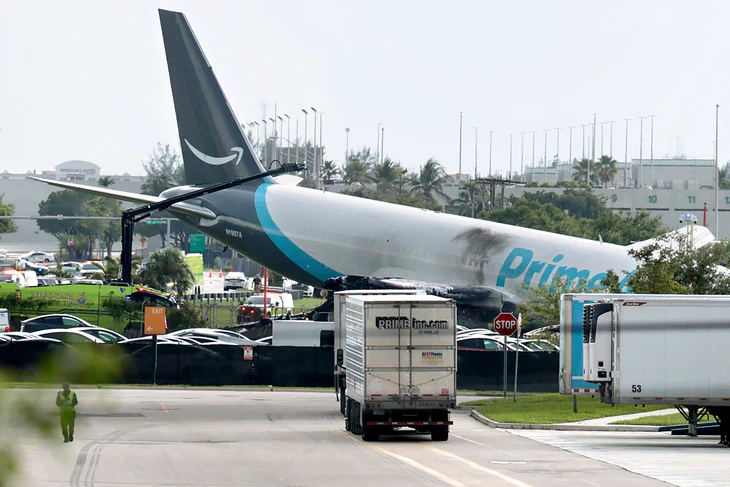
AMAZON SUSPENDS OPERATIONS WITH 21 AIR FOLLOWING MIAMI CARGO PLANE CRASH
Amazon has announced that it is temporarily suspending operations with cargo airline 21 Air following a serious accident at Miami International Airport in the United States. On September 6, 2026, a Boeing 767-300 operated by 21 Air as part of the Amazon Air network crashed while landing at Miami International Airport. The aircraft subsequently collided […]
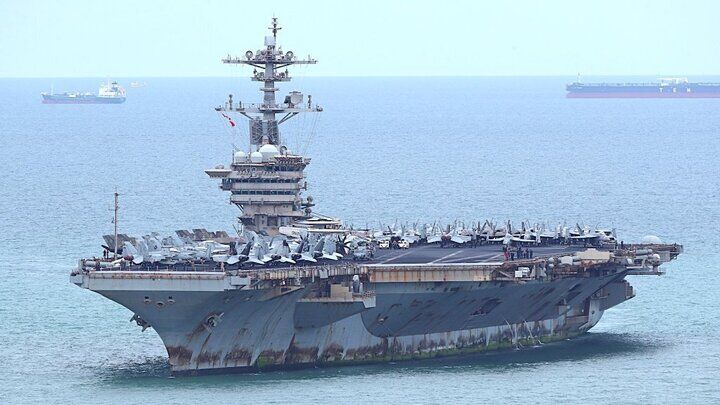
286 DAYS AT SEA: US AIRCRAFT CARRIER SHOWS SIGNS OF AN ARDUOUS JOURNEY
After 286 consecutive days at sea, the nuclear-powered aircraft carrier USS Abraham Lincoln arrived at Laem Chabang Port in Thailand on September 2. Images taken after its arrival showed large areas of rust and marine growth around the ship’s waterline, providing visible evidence of the long period the vessel spent operating at sea. USS Abraham […]
218,000 BARRELS/DAY AT RISK OF SHORTAGE: MARINE FUEL SUPPLIES COME UNDER PRESSURE
The global marine fuel market is facing a potential supply shortage in Q3 2026 as refineries come under pressure from prolonged geopolitical conflicts and supply disruptions. According to Reuters, the shortfall in fuel oil used by ships and power plants could reach 218,000 barrels per day, a sharp increase from just around 6,000 barrels per […]
7 EXPORT PRODUCTS EXCEEDING USD 10 BILLION IN THE FIRST 8 MONTHS OF 2026
In the first eight months of 2026, seven major Vietnamese export product groups recorded export values exceeding USD 10 billion, reaffirming the strong momentum of Vietnam’s exports and the growing position of Vietnamese products in international markets. Leading the way was Computers, Electronic Products and Components, with an export value of USD 101.059 billion, accounting […]
AFTER SEPTEMBER 2: HOW ARE FUEL PRICE FLUCTUATIONS AFFECTING LOGISTICS AND FREIGHT TRANSPORTATION?
Following the September 2 holiday, fuel prices in Vietnam have continued to attract attention from the transportation and logistics industry. While gasoline prices have increased, diesel prices have moved in the opposite direction, creating different impacts across the freight transportation sector. For transportation companies, fuel is one of the largest operating expenses, particularly for road […]

VIETNAM HAS A 150,000-HECTARE BAY – THE “FORGOTTEN PARADISE” ATTRACTING MORE THAN VND 65 TRILLION IN INVESTMENT
Did you know that Vietnam is home to a bay spanning up to 150,000 hectares, featuring exceptional natural landscapes and enormous potential for marine economic development? Once described as a “forgotten paradise,” this area is gradually being revitalized as it attracts more than VND 65 trillion in investment. Beyond its tourism value, the bay also […]

Contact Us
Get Solutions Now
We respond to all requests within 24 hours.
 0937 48 18 98


